Sunday, January 7, 2018

The Best and Worst of 2017

"It was the best of times, it was the worst of times...," wrote Charles Dickens in the opening line of his novel, A Tale of Two Cities.  As I thought about our experiences over the past year, that sentiment seem to fit our 2017 year, too, in several categories.


Habitat Builds

When Tim and I set goals for our full-time lifestyle back in October 2015, we planned to participate in eight Habitat for Humanity builds a year.  We've discovered that's a little ambitious for us, given that we spend three months out of the year on the family farm helping with harvest.  This year we were only able to fit in six Habitat builds, three in Florida (Del Ray, Fellsmere, Eustis), Salisbury, CT, Sisters, OR and Mandeville, LA.

Delray Beach, FL

Fellsmere, FL

Eustis, FL

Salisbury, CT

Mandeville, LA

That low number was due in large part to my recuperation period from the surgery I had to implant a second cochlear device in my right ear last March.

Sisters, OR

But in reviewing those six builds, I would have to rank the build in Sisters, OR as the lowest contender, basically because of the air quality conditions we endured due to the proximity of the Milli wildfire that raged nearby.  Wearing respirators while we worked was not much fun; plus, spending two weeks painting the exterior of one house and the Thrift Store was not Tim's favorite assignment.

On the other hand, selecting the best Habitat build is not so easy.

Sue, Judy, Cindy & Marty in Fellsmere

Returning to Fellsmere, FL last January for a reunion with the people we worked with during our very first Habitat experience in 2016 was a joy.  It was wonderful to renew friendships and see the progress in the neighborhood the local Habitat affiliate is establishing there.

Mike, Marguerite & Tim in Salisbury

We also enjoyed the build in Salisbury, CT, where the small affiliate is just beginning to host Care-A-Vanners.

Mandeville, LA

And finally, the build in Mandeville, LA was the most rewarding work-wise because we started with a blank slate, just the concrete slab, and ended by raising the trusses and seeing the home take shape.

Milli Wildfire

Natural Phenomena

I mentioned the worst natural disaster we encountered above, the Milli wildfire that burned 24,079 acres before it was finally contained.  But the town it threatened, Sisters, OR, was also the scene of the most fascinating natural phenomena we saw.  Sisters was situated squarely in the middle of the 2017 solar eclipse's path of totality.  Darlene, our construction site manager, hosted a brunch at her mountaintop home where we were above the smoke that enveloped the town.


There we marveled as the moon progressively blocked the sun, causing birds to sing their nighttime calls and nocturnal species like bats to venture out as day turned into night for a brief 34 seconds.

Navigation 

The scariest navigation blunder we made in 2017 took us across the George Washington Bridge from New Jersey into Manhattan, NY.  Yikes!  Our miscalculation saw us inadvertently enter a parkway where we barely squeaked through the bridge underpasses.

Chimney Rock


In contrast, following the Oregon Trail through sparsely populated states last summer was a breeze.

Campgrounds

James County Campground near Charleston, SC

We stayed at so many of beautiful campgrounds this past year that picking only one is impossible.  Those that made our list were John Prince County Park, Fort DeSoto County Park, James County Park, Myrtle Beach and St. Lucie Lock.  We also liked the Mike Roess Gold Head State Park, even though it was the scene of our worst misadventure of the year.


Mike Roess Gold Head State Park

Cities

We logged over 15,000 miles as we traveled from Kansas to Florida to Connecticut to Kansas to Seattle to Kansas to Florida once again.  Along the way we visited many cities and found our favorites on both coasts.  The southern charm of Charleston, SC beguiled us while scintillating Seattle, WA wooed us in the West.  We also visited Victoria, British Columbia, another city we loved.

National Parks

Three more national parks were ticked off our list, Cuyahoga, Olympia and Mount Rainier as well as 14 other National Park Service historic sites.


Olympia with its three distinctive ecosystems was our favorite.  It's breathtaking vistas were stunning.  Unfortunately, our plans to visit Crater Lake were scuttled by the wildfires in Oregon last summer.


Personal Loss

Finally, the worst event of 2017 was the death of my dear mother on Dec. 6, 2017.  Although her dementia robbed us of her sparkling personality years before her passing, her face still lit up whenever she saw me.  I'm so thankful I was able to spend three months of this year caring for her.


The Bible says in Ecclesiastes 3:1 that "to everything there is a season and a time to every purpose under heaven.  That chapter goes on to list the best and worst of times in different seasons of life.  In many ways, that seems to sum up 2017 for me.

Tuesday, December 5, 2017

It's a Lock!


Several campgrounds are vying for our Number One Campground Choice for 2017 so perhaps it's too early to mention the winning one that's a lock.


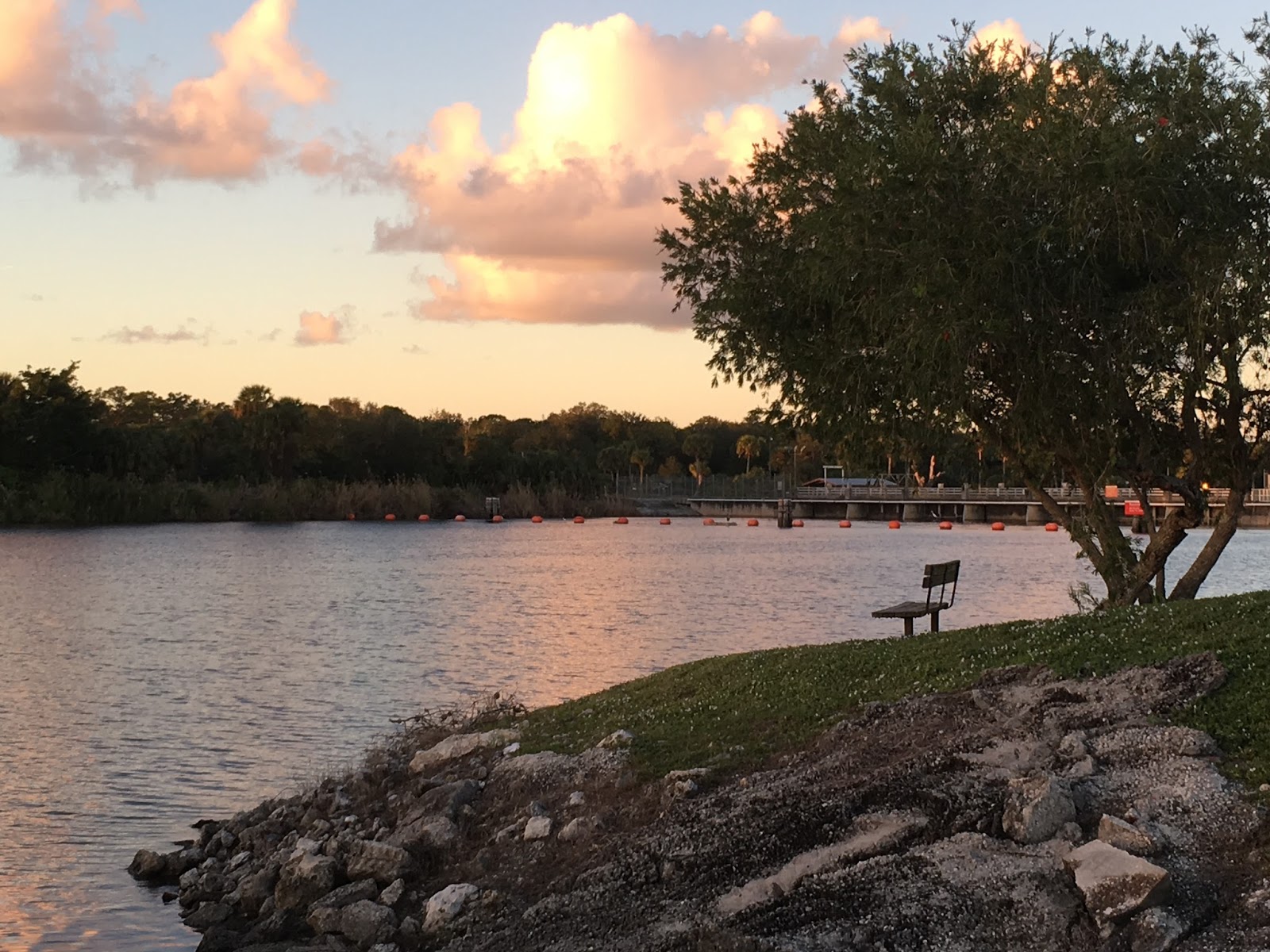
But then on the other hand, our latest campground is a lock, the St. Lucie Lock Recreation Area, a Corp of Engineers' facility built next to the St. Lucie Lock.


The lock is one of a series that enable boaters to sail the shortcut passage of the Intercoastal Waterway, the one that bisects the Florida peninsula from Stuart, FL on the Atlantic side to Fort Myers on the Gulf of Mexico.

Tim and I found this campground in 2016 when we were working at a nearby Habitat for Humanity construction site in Indiantown, FL.  That first visit coincided with the passage of a very special outrigger, the Hōkūleʻa, through the lock.  (Read here to learn more of that chance encounter.)

We knew then that we wanted to come back to Stuart and camp at this special place.


However, it wasn't easy to make a reservation on recreation.gov.  Oh, logging into the website was not the problem; it was the waiting up until midnight six months prior to the dates we wanted in order to click Submit ahead of all the other aspirants who desired one of the nine campsites located at this sought-after campground that was hard.


Thanks to Tim's lightning-quick stroke, we landed on Site 5 for these past two weeks.


Two campgrounds that will not make our short list, despite their high popularity and our fixed reservations are Fort Pickens State Park near Pensacola, FL and Fort Clinch State Park on Amelia Island, northeast of Jacksonville.  Unfortunately, two days before our scheduled Nov. 12th arrival at Fort Pickens State Park, we were notified that because of the impact of Hurricane Nate, the road leading onto the island was inundated with sand, making passage to the currently closed park impossible.  Then last week the ranger at Fort Clinch State Park called with news of a water main break that necessitated a limited closing of that park.  How disappointing!

We had to scramble to find other places to camp, not easy prizes to obtain in Florida during snowbird season.  How lucky we were to lock down campsites at a commercial campground in Pensacola and at the Mike Roess Gold Head Branch State Park in north central Florida!  Our mid-November stay at the Pensacola campground received an average score from us.


The jury is still out on Mike Roess Gold Head Branch State Park where we'll camp this next week.  It, too, could be a lock, if it wows us as much as St. Lucie Lock has done.

Postscript:  We arrived at Mike Roess Gold Head Branch State Park yesterday and we're looking forward to exploring its hiking and biking trails.  Could this be another contender for our 2017's Favorite Campground?  But first we had to call a tow truck to winch the Dawntreader out of the sandy campsite Tim turned into as he tried to back our bus in the campsite across the way.  This was our first experience of getting into a position that we could not get out of using our own resources, but our dismay lasted only a few hours until the tow truck came to our rescue.


Fortunately, all's well that ends well!  Tim paid the driver and we set up camp in a nicely graveled, firm soil foundation campsite.


Friday, December 1, 2017

Flagler’s Whitehall

Whitehall in Palm Beach, FL

In 1892 Henry Flagler, the Standard Oil capitalist whose attentions had turned to building a railroad the length of Florida's east coach and luxury hotels to house the tourists that would follow, visited the narrow, palm-laden barrier island of Palm Beach.

Henry Morrison Flagler
(Photo courtesy of Flagler Museum)

Returning to his St. Augustine home, he announced to his subordinates, "I have found a veritable Paradise!" and directed them to buy property to erect the "largest hotel in the world" and to push the tracks of his Florida East Coast Railroad ever further south.

Vintage Postcard of the Royal Poinciana Hotel

Two years later the Royal Poinciana Hotel, a six-story Georgian-style edifice with over 3 miles of hallways, opened its doors--to 17 guests.  But once the word got out, thousands of sun-seekers flocked south to enjoy its opulent accommodations of more than 1080 rooms; that is until the Stock Market Crash of 1929 swallowed up America's prosperity.  The hotel closed its doors in 1934 and was torn down a year later, a victim of the Great Depression.


Grand Hall Entry

However, Whitehall remains.

The Drawing Room

Tim and I visited this winter retreat with its 75-plus rooms that Flagler at age 72 built as a wedding gift for his 34-year-old third wife, Mary Lily Kenan Flagler.

Mary Lily Kenan Flagler and Henry M. Flagler
(Photo courtesy of Flagler Museum)

The palatial home was scheduled for demolition in 1959.

The Ballroom

However, Flager's granddaughter, Jean Flagler Matthews, rescued it and turned it into the Flagler Museum.

The Billiard Room

Most of its furnishings are original to the building.

The Music Room

Famous paintings purchased by Henry and Mary Lily adorn its walls.

The Music Room

The pipe organ still holds pride of place in the music room.

Linke Clock

A priceless Louis XV-style clock made by Francois Linke and shown at the 1900 Paris Exposition graces the grand hall entry.  It is truly an amazing residence.

The Pavillon

On the grounds of the museum is the Pavillon erected in 2005.

Railcar No. 91 of the Florida East Coast Railway

It was built to showcase Flagler's private railcar, No. 91.

The Interior of Railcar No. 91

Once again the railcar reveals the wealth of its owner.  Now, that's the way to travel in style!

Monday, November 27, 2017

Atlantis


The myth of the "Lost City of Atlantis" has been a siren call for explorers for hundreds of years.  The possibility of a sunken city filled with treasures is an almost irresistable lure so is it any wonder that The Atlantis on Paradise Island in the Bahamas appropriated the name?  What better brand for attracting visitors to this Caribbean resort?


Tim and I succumbed to its draw and we pulled Jillian and Richard along with us for a 4-day Thanksgiving vacation.


Not only did we enjoy the crystal clear turquoise waters we found at the resort's beach, but we also plunged down the Mayan Temple's Leap of Faith and other waterslides, rode an inter tube through the Lazy River and basked beside one of the resort's eleven swimming pools.


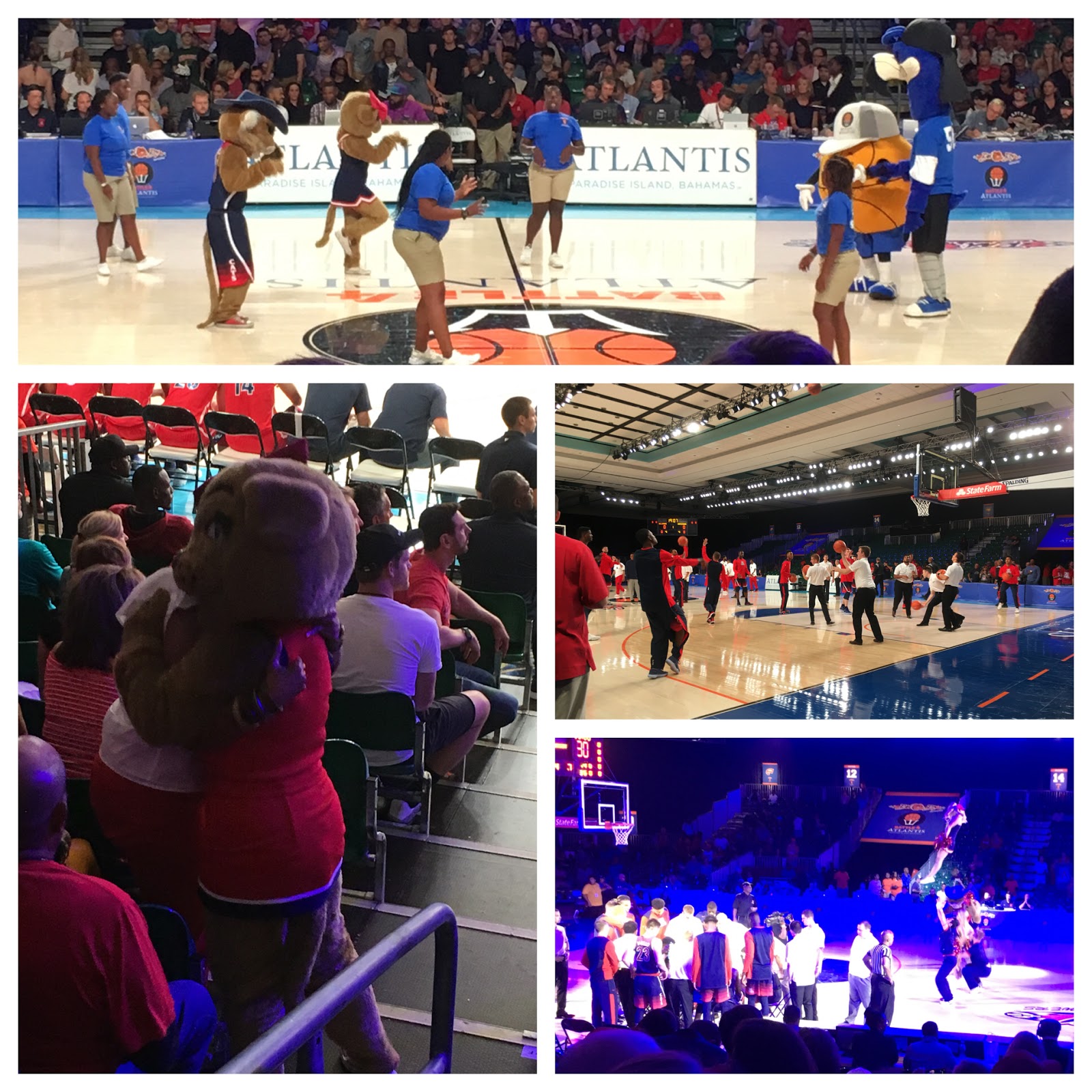
We arrived on the island with high hopes for our once-hometown men's basketball team, Jillian's alma mater, the University of Arizona, who had also traveled there for the Battle 4 Atlantis tournament.


Our Thanksgiving dinner was a bratwurst and a drink from the venue's concession stand.


We watched intently, but the very first tipoff (shown in the video below) should have...well, tipped us off that the UofA Wildcats were not going to do well.


Unfortunately, Arizona ended up at the bottom of the bracket but the opportunity to watch teams from Purdue, Wisconsin, Tennessee, Villanova and others play was nevertheless exciting as was sharing the hotel's elevator with these giant young men.


Our time at Atlantis ended all too quickly, but the memories we made there will last a lifetime.


Friday, November 17, 2017

An Aerial Adventure

National Naval Aviation Museum

Our tour guide's anecdotes turned yesterday's visit to the National Naval Aviation Museum into an aerial adventure.  The museum located at the Naval Air Station Pensacola was a must-see stop for Tim and I as we passed into the Florida Panhandle.

The Blue Angels

Our only regret was that we missed the performance of the Blue Angels, the elite fighter jet demonstration squadron, that took place here on Veterans Day, but that just gives us another reason to return.

Retired U.S. Air Force Colonel Kincaid had a story for every plane he pointed to.  His histories were entertaining and revealed each plane's importance to wartime aviation.  These are the ones that stuck with me.

NC-4 Flying Boat, the first aircraft to cross the Atlantic Ocean

Designed to be an anti-submarine vessel during WWI, the NC-4 Flying Boat's flight in May 1919 from Naval Air Station Rockaway Beach, NY to Lisbon, Portugal beat Charles Lindberg's solo flight across the pond by eight years.  Accompanied by its sister airplanes (the NC-1 and the NC-3 which unfortunately crashed in the Azores), the NC-4 took 19 days to accomplish the feat making stops along the way in Massachusetts, Nova Scotia, Newfoundland and the Azores Islands.  Navigation aids were non-existent in this early era of aviation.  In order for the Flying Boats to cross the ocean, 22 Navy ships spaced across the flight path approximately 50 miles apart sent up smoke signals during the daylight hours and red flares at night for the pilots to follow.  Hearing its history was even more absorbing when one learns that its crew members had to walk the wings in-flight to service the four Liberty engines that powered the craft.  Yikes!  I will never complain about the discomforts of a transatlantic flight again!

Lt. Commander Edward Henry O'Hare

Being from Chicago, Tim was especially interested in the story of Lt. Commander Edward Henry (Butch) O'Hare, the first naval recipient of the Congressional Medal of Honor and for whom Chicago's O'Hare Airport is named.  On Feb. 20, 1942 and despite the loss of his teammates, O'Hare positioned his F4F Wildcat fighter airplane between his aircraft carrier and the advancing Japanese formation of nine attacking heavy bombers.  His citation reads,

"Without hesitation, alone and unaided, he repeatedly attacked this enemy formation, at close range in the face of intense combined machine gun and cannon fire.  Despite this concentrated opposition, Lieutenant O'Hare, by his gallant and courageous action, his extremely skillful marksmanship in making the most of every shot of his limited amount of ammunition, shot down five enemy bombers and severely damaged a sixth before they reached the bomb release point.  As a result of his gallant action--one of the most daring, if not the most daring, single action in the history of combat aviation--he undoubtedly save his carrier from serious damage."  

This is the stuff of Hollywood!  Interestingly enough, his father, Edward Joseph O'Hare, was Chicago mobster Al Capone's accountant who turned against him and helped the FBI convict Capone of tax evasion.  His story was retold in the movie, The Untouchables.

F4F-3 Wildcat

Due to German and Japanese submarine activity off the East and West coasts of the United States, another training area was needed where U.S. Navy pilots could practice taking off and landing on aircraft carriers.  Lake Michigan was the best choice, but it also became known as the Navy's cold water storage unit because of the aircraft that were lost to its waters during training forays.  Shown in the photo above, a Wildcat airplane similar to that flown by O'Hare is on display at the museum, one of several resurrected and restored planes.


Finally, former President George H. W. Bush in World War II was a 20-year-old naval pilot when under attack he ditched his plane near Chichi Jima, a small atoll in the Pacific Ocean.  The Japanese commander who held the island practiced cannibalism, directing his officers to eat the livers of the eight unfortunate pilots in Bush's squadron who were swept ashore.

Aircraft flown by President George H.W. Bush

Bush, however, brought his plane down further away from the island but caught his parachute on the tail of his plane during his exit.  He managed to free it, and once in the water, scrambled into the life raft.  Fortunately for him, there was an American submarine in the area that surfaced and rescued him.  Unfortunately, this happened on the first day of the submarine's 30-day mission leaving Bush no choice but to join in the sub's operation until its mission was concluded.

My uncle, Byron Slade, was also a naval pilot who flew Wildcats off aircraft carriers during World War II.  He passed away in 2008, but hearing these stories brought his memory close again.  He, too, had some amazing stories to tell.